A deepening crisis at U.S. airports is unfolding as the partial shutdown of the Department of Homeland Security (DHS)—driven by a bitter political standoff over immigration enforcement—continues to ripple across the country. What might have once seemed like an abstract fight in Washington has now materialized into long lines, shuttered checkpoints, and a demoralized workforce struggling to survive without pay.
At the center of the disruption are Transportation Security Administration (TSA) officers, roughly 50,000 of whom have been forced to work without pay for over a month. The shutdown, which began in February after Congress failed to reach an agreement on DHS funding, is directly tied to disputes over the Trump administration’s aggressive immigration policies and the role of Immigration and Customs Enforcement (ICE).
“When you get a partial paycheck, when you expect $2,000 and you receive $500, and then you expect $2,000 and you receive zero, you’re now $3,500 in the hole,” Johnny Jones, Secretary-Treasurer of AFGE TSA Council 100 and a Dallas-based TSA worker, previously toldUSA Today. “I don’t have anybody I can call and ask for $3,500.”
The consequences have been immediate and severe. Absenteeism among TSA officers has surged to unprecedented levels, with national call-out rates exceeding 10% and spiking as high as 30 to 40% at major airports like Atlanta, Houston, and New York. In some locations, more than half the workforce has failed to show up, a stark indicator of both burnout and financial desperation.
“The morale is getting worse by the day because no one knows when this is gonna end,” said Cameron Cochems, a union steward and lead TSA officer in Boise, Idaho.
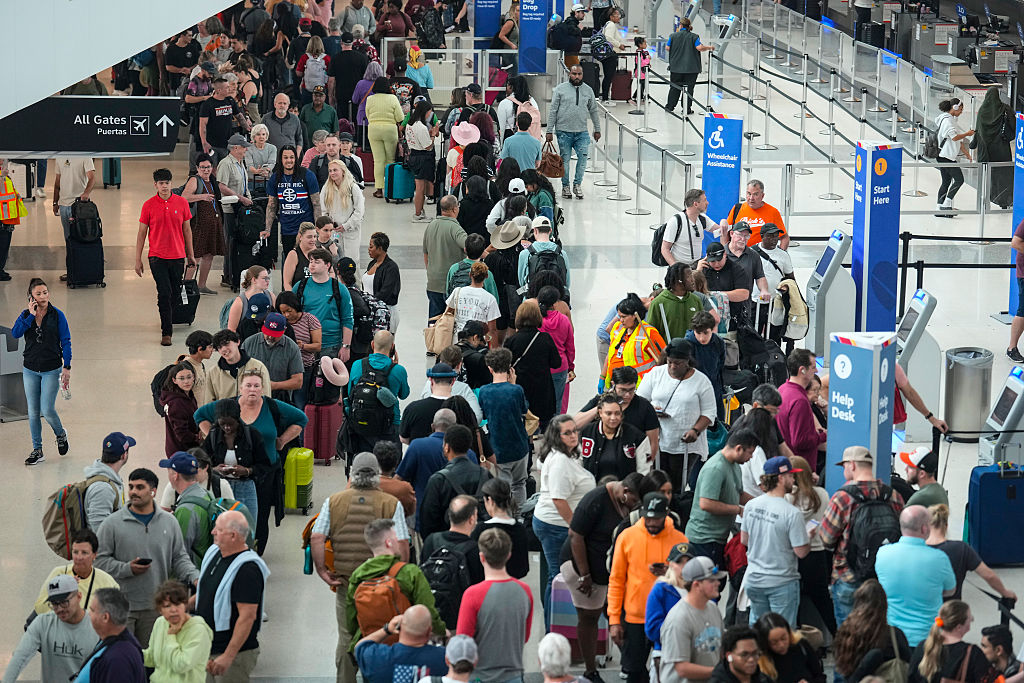
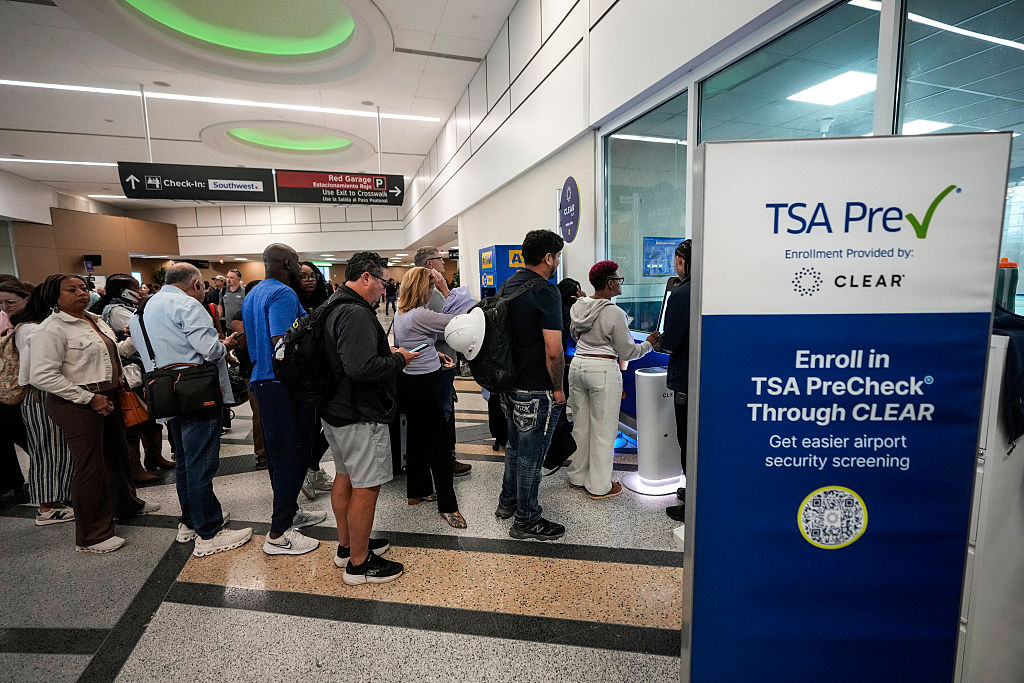
For travelers, the experience has become increasingly chaotic. Security lines now stretch for hours at some of the nation’s busiest hubs, including Hartsfield-Jackson in Atlanta, as understaffed checkpoints struggle to keep pace with demand. With spring travel surging toward record levels—an estimated 171 million passengers—the system is buckling under pressure. Airlines and airport officials are warning that delays, missed flights, and cancellations could soon become the norm.
Source: Smith Collection/Gado / Getty
Even more alarming is the growing possibility of airport shutdowns. Federal officials have warned that smaller airports, which often rely on a single TSA checkpoint, may be forced to close entirely if staffing shortages worsen. Larger airports may attempt to cope by consolidating security operations, but even those measures are proving insufficient as hundreds of TSA officers quit outright—at least 366 so far.
Behind the scenes, the human toll on TSA workers is staggering. Many are facing eviction, empty refrigerators, and mounting debt after missing multiple paychecks. Some have reportedly resorted to extreme measures just to afford gas to get to work. Airports have begun organizing food drives and distributing gift cards, a stopgap solution that underscores the severity of the crisis rather than solving it.
This situation is not merely a bureaucratic failure—it is a direct consequence of a political standoff rooted in deeply contentious immigration policies. Critics argue that the insistence on maintaining and expanding aggressive ICE operations has effectively held essential government functions hostage, leaving frontline workers and everyday travelers to absorb the damage.
The result is a system in visible distress: overworked agents, stranded passengers, and a national transportation network teetering on the edge of broader collapse. As the shutdown drags on, the consequences are no longer theoretical—they are playing out in real time at airport security lines across the country, where frustration, uncertainty, and hardship have become the new normal.